
In-Slab vs In-Screed Hydronic Heating
In-slab and in-screed hydronic heating both use warm water pipework beneath the finished floor to provide quiet, radiant heat. The main difference is where the pipework sits within the floor construction.
In-slab heating embeds the pipework within the concrete slab itself, creating a large thermal mass that provides steady, long-duration warmth. In-screed heating places the pipework above the structural slab within a screed layer, bringing the heating system closer to the finished floor for a faster response.
Neither system is automatically better. The right choice depends on the project stage, floor construction, available build-up, desired response time and how the building will be used.
In-Slab vs In-Screed at a Glance
| Type | In-Screed Hydronic Heating | In-Slab Hydronic Heating |
|---|---|---|
| Pipe location | Within the concrete slab | Above the structural slab, within screed |
| Best suited to | New slabs and early-stage construction | New builds, major renovations and new floor build-ups |
| Thermal mass | Higher | Lower |
| Heating response | Slower, more stable | Generally faster |
| Floor build-up | No separate heating screed required | Requires suitable screed depth |
| Insulation | Slab and perimeter conditions need consideration | Insulation can be installed directly below the heated screed where suitable |
| Operation | Suited to steady background heating | More responsive to changing heating demand |
| Installation timing | Before concrete is poured | Before screed and finished flooring |
| Heat pumps | Well suited when correctly designed | Well suited when correctly designed |
What Is In-Slab Hydronic Heating?
In-slab hydronic heating places warm-water pipework within the concrete slab before it is poured. Once operating, heat from the pipework is absorbed by the surrounding concrete and gradually released through the floor into the occupied space.
The concrete therefore becomes part of the heating system.
Its high thermal mass means an in-slab system generally takes longer to change temperature than an in-screed system. The benefit is stable, long-lasting heat delivery once the slab reaches operating temperature.
Because the heating pipework is incorporated into the structural floor rather than requiring a separate heated screed layer, in-slab heating can also be useful where additional floor build-up needs to be minimised.
In-slab heating is typically suited to:
- New homes with concrete slabs
- Architect-designed residences
- Commercial buildings planned before slab construction
- Projects where additional floor height needs to be minimised
- Buildings intended to maintain relatively consistent indoor temperatures
- Projects using low-temperature hydronic heat sources such as air-to-water heat pumps
The key limitation is timing. A true in-slab system must be designed and installed before the concrete pour. Once the slab has been completed, another solution such as in-screed heating generally needs to be considered.
What Is In-Screed Hydronic Heating?
In-screed hydronic heating places the pipework above the structural concrete slab and within a separate screed layer beneath the finished floor.
Because the pipework sits closer to the floor surface and heats less thermal mass, the floor can generally respond faster to changes in heating demand than an in-slab system.
Where the floor construction permits, insulation boards can also be installed between the structural slab and heated screed. This helps reduce downward heat transfer and directs more useful heat toward the occupied space.
In-screed heating is typically suited to:
- Major renovations
- New floor build-ups over an existing structural slab
- Bathrooms, kitchens and tiled living areas
- Projects requiring a faster heating response
- Architect-designed homes where floor levels can be coordinated
- Projects where insulation can be incorporated directly beneath the heated screed
Available floor height needs to be considered early. The insulation, pipework, screed and final floor finish all contribute to the total build-up.
The Main Difference: Thermal Mass
The most important operational difference between the two systems is thermal mass.
With in-slab heating, the pipework heats a large concrete mass. This takes time, but the slab also stores significant heat and continues releasing it after the heat source reduces output or switches off.
This makes in-slab heating particularly suited to buildings where a relatively stable temperature is maintained for long periods.
With in-screed heating, the pipework heats a smaller mass closer to the finished floor. The floor therefore generally warms and cools more quickly.
That can make in-screed heating useful where occupancy or heating requirements change more frequently.
The choice is therefore not simply about which system heats faster. It is about matching the thermal behaviour of the floor to the way the building will operate.
Insulation and Downward Heat Loss
Insulation is an important consideration for both systems, but the floor construction changes how it can be incorporated.
For in-screed systems, insulation boards can often be positioned directly beneath the heated screed. This creates a defined thermal break between the heated layer and the structural slab, helping direct heat toward the finished floor.
In-slab systems require the slab construction, slab-edge conditions and insulation strategy to be considered as part of the building design. Without appropriate thermal detailing, some heat can be transferred toward the ground or slab perimeter instead of the occupied space.
This does not make in-slab heating inherently inefficient. It means the heating system and building envelope need to be designed together.
Floor Height and Construction
Floor build-up can determine which system is practical before heating performance is even considered.
In-Slab
The heating pipework forms part of the slab construction, so a separate heating screed is not required. This can minimise the architectural impact of the heating system and is particularly useful where finished floor levels or ceiling heights are tightly controlled.
However, the system needs to be coordinated with reinforcement, penetrations, services, manifolds and the concrete pour.
In-Screed
In-screed heating requires sufficient space above the structural slab for the selected system build-up.
This may include:
- Structural slab
- Insulation board
- Hydronic pipework
- Screed
- Finished floor
The required build-up should therefore be resolved before doors, stairs, joinery, bathrooms and finished floor levels are locked in.
Which System Is More Responsive?
In-screed heating generally responds faster.
The reason is physical rather than a difference in the basic hydronic technology: there is less material between the heating pipe and occupied space, and less thermal mass needs to change temperature.
In-slab heating behaves differently. Its larger thermal mass means it is normally better operated as steady background heating rather than rapid on-and-off heating.
That distinction becomes important when designing zoning and controls.
A highly occupied home maintaining a stable temperature may benefit from the thermal stability of a slab. Spaces with more variable schedules may benefit from the additional responsiveness of an in-screed system.
Which Works Better With a Heat Pump?
Both can work very well with an appropriately designed air-to-water heat pump.
Hydronic underfloor heating uses a large floor area to deliver heat, allowing useful room output at comparatively low water temperatures. This can suit the operating characteristics of modern hydronic heat pumps.
However, choosing a heat pump should not be separated from the heating design.
The required:
- Building heat load
- Design water temperature
- Pipe spacing
- Circuit lengths
- Flow rates
- Floor finish
- Heating zones
- Heat pump capacity
- Controls
should be assessed as one system.
Changing from in-slab to in-screed does not by itself make a hydronic system efficient. Correct system design does.
What About Floor Finishes?
Both systems can work with a range of floor finishes, but the material above the pipework affects heat transfer.
Tile and natural stone generally transfer heat effectively and are common choices for hydronic underfloor heating.
Timber, engineered flooring, vinyl, carpet and other finishes can also be possible, but their thermal resistance and manufacturer temperature limits need to be considered during design.
Floor finishes should therefore be selected early rather than treated as a purely architectural decision after the heating system has been designed.
Which One Should You Choose?
Choose in-slab hydronic heating when:
- A new concrete slab has not yet been poured
- The system can be incorporated into the structural design
- Minimal additional floor build-up is important
- Stable, long-duration background heating suits the building
- Construction coordination can occur early
Choose in-screed hydronic heating when:
- The structural slab already exists
- A new screed or floor build-up is being installed
- Faster thermal response is desirable
- Insulation can be incorporated beneath the heated layer
- Available floor height can accommodate the system
For some projects, the decision is dictated almost entirely by construction stage. For others, both systems are possible and the choice should be based on thermal performance, floor levels, controls and how the building will actually be occupied.
The System Should Be Designed Before Construction Locks It In
The difference between in-slab and in-screed heating goes beyond where the pipe is installed.
Heat loads, pipe spacing, circuit lengths, manifold locations, water temperatures, insulation, floor finishes, zoning and heat-source selection all affect the final result.
Early coordination is particularly important because both systems eventually become concealed within the building fabric. Changes that are simple during design can become difficult or expensive once concrete, screed or finished flooring has been installed.
SmartHeat designs, supplies and installs hydronic underfloor heating systems for residential and commercial projects across Sydney and NSW.
Share your drawings, floor build-up and project stage with our team to determine whether in-slab or in-screed hydronic heating is the better fit for your project.
Explore the installation details for each approach to see how the floor construction and stage of your project shape the next step.
Projects
Related projects
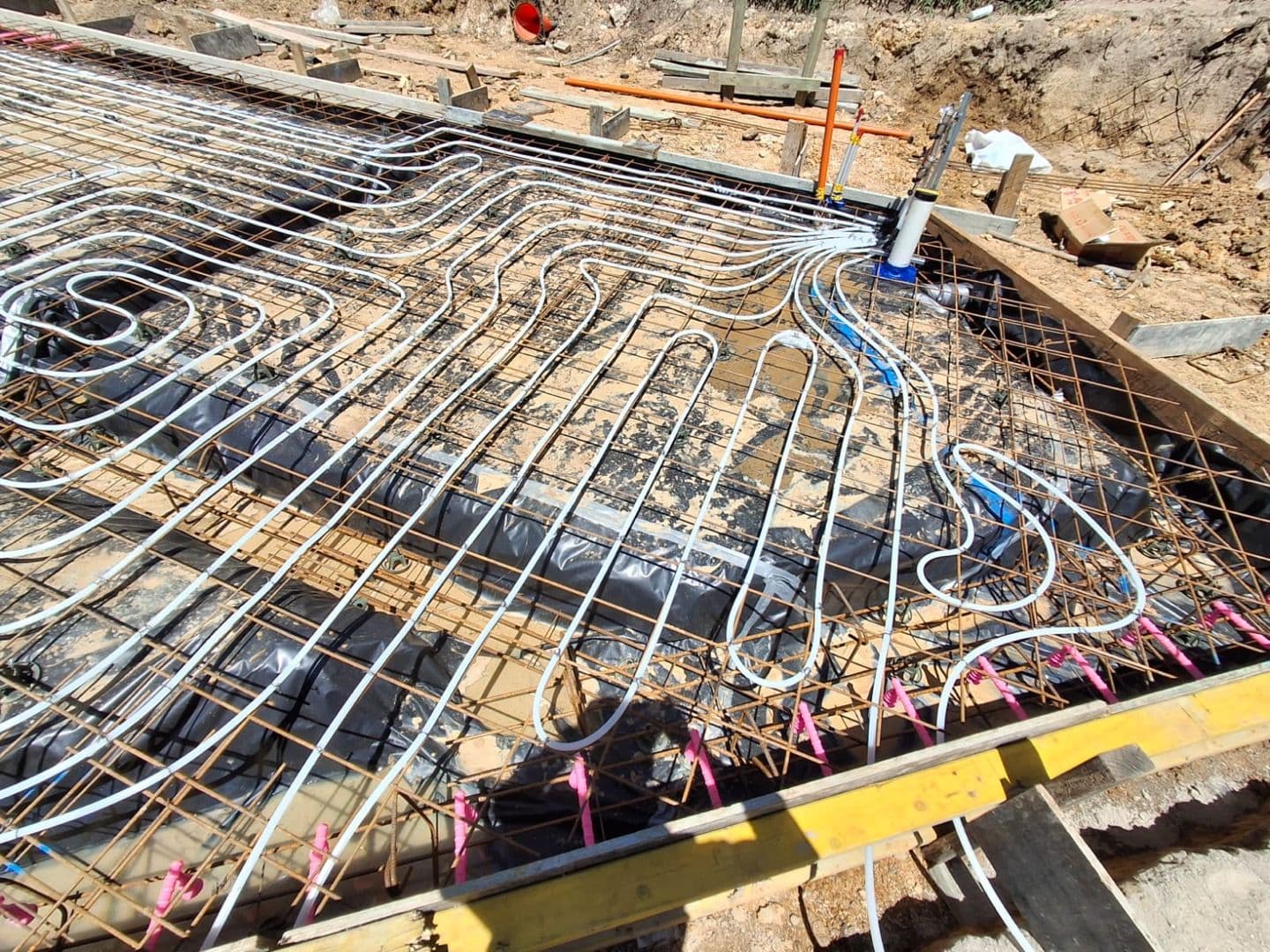
Gladesville, Northern Sydney, NSW
Hydronic In-Slab Underfloor Heating - Gladesville
Hydronic Underfloor Heating - In-Slab
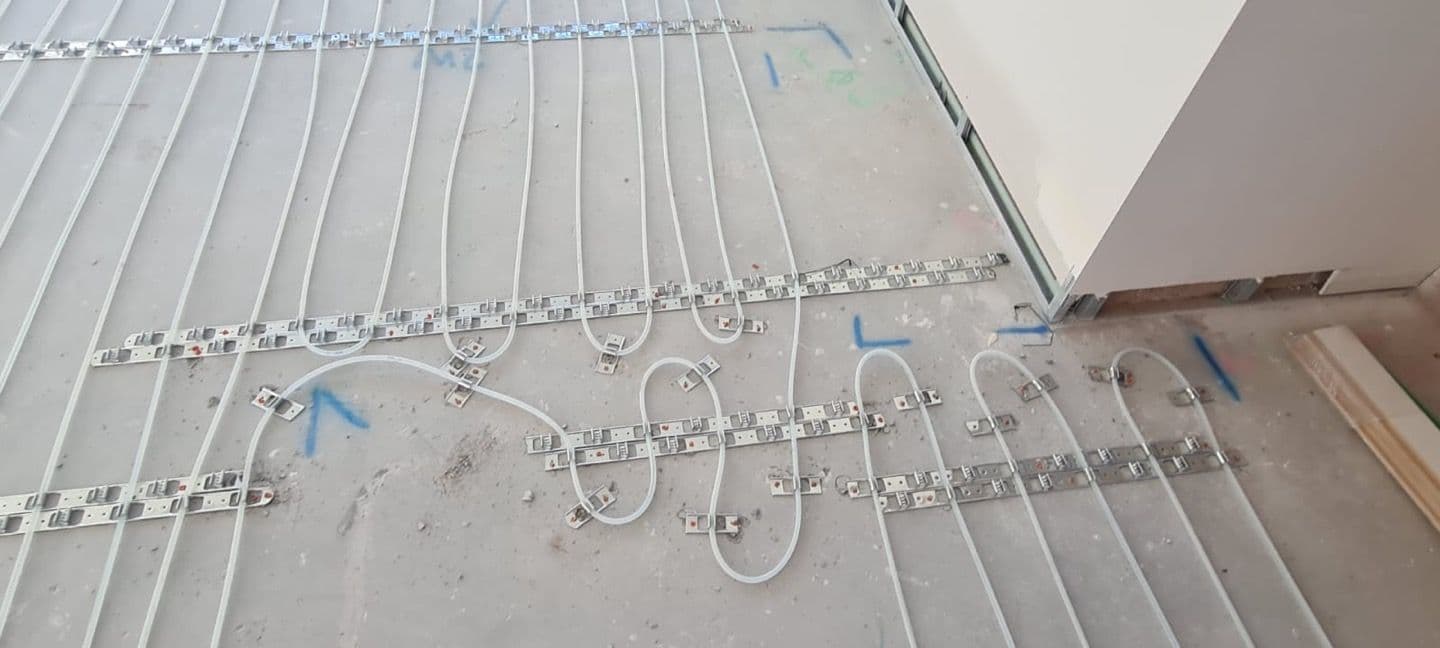
Bronte, Eastern Suburbs, NSW
Hydronic In-Screed Underfloor Heating – Bronte
Hydronic Underfloor Heating - In-Screed

Guildford, Western Sydney, NSW
26kW Inverter Hydronic Heat Pump – Guildford
Heat Pump Installation - Residential Models
Frequently asked questions
Frequently Asked Questions
Is in-screed hydronic heating better than in-slab?
Not necessarily. In-screed heating generally responds faster and can allow insulation directly beneath the heated layer, while in-slab heating provides greater thermal mass and can avoid additional heating-related floor build-up. The better option depends on the building and construction stage.
Is in-screed heating faster than in-slab heating?
Generally, yes. In-screed pipework sits closer to the finished floor and heats a smaller thermal mass, allowing the floor temperature to change more quickly.
Can hydronic heating be installed over an existing concrete slab?
An in-screed system may be possible where sufficient floor build-up is available. Floor levels, insulation, screed depth, floor finishes and adjoining building elements need to be checked before specifying the system.
Can a heat pump run in-slab or in-screed heating?
Yes. Both systems can work with correctly selected air-to-water heat pumps. Heat load, required water temperature, flow rates and the overall hydronic design need to be matched to the heat pump.
Which system is better for renovations?
In-screed heating is generally more practical where an existing structural slab will remain and a new floor build-up can be added. In-slab heating normally requires installation before a new concrete slab is poured.
Does in-slab heating take a long time to warm up?
Compared with an in-screed system, generally yes. The concrete slab has significantly more thermal mass to heat. Once warm, however, that same mass provides stable heat and releases stored energy gradually.