
Heat pumps and gas boilers can both heat the water circulated through a hydronic heating system. The main difference is how they produce that heat.
A gas boiler burns fuel and transfers the resulting heat into the system water. A hydronic heat pump uses electricity to capture heat from the surrounding environment and move it into the water.
That difference affects energy use, operating temperatures, radiator selection, electrical and gas requirements, and how the complete system should be designed.
Hydronic Heat Pump vs Gas Boiler at a Glance
| Heat Source | Hydronic Heat Pump | Gas Boiler |
|---|---|---|
| Energy source | Electricity | Natural gas or LPG |
| How it heats water | Transfers heat from the outside air | Burns gas to produce heat |
| Water temperature | Best suited to lower-temperature systems | Can readily serve higher-temperature systems |
| Underfloor heating | An excellent match for low-temperature operation | Suitable, with temperature control where required |
| Radiators | Radiators must be sized for the design water temperature | Often compatible with existing higher-temperature radiators |
| Installation requirements | Suitable electrical capacity and space for an outdoor unit | Gas connection, combustion air and a compliant flue |
| Solar PV | Solar generation can help support electricity use | No direct operational benefit |
| Cooling | Possible with a reversible unit and suitable emitters | Heating only |
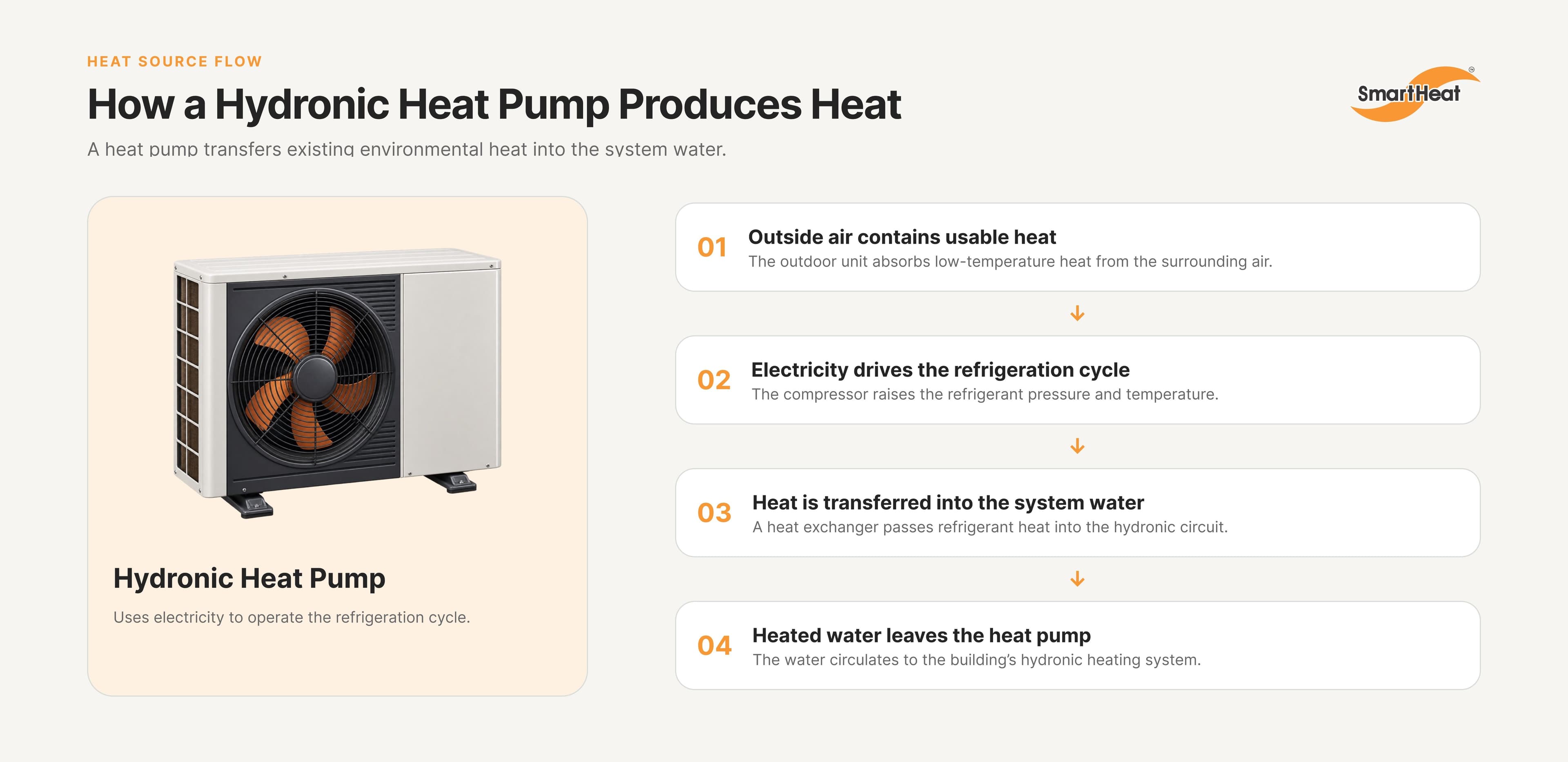
How Does a Hydronic Heat Pump Produce Heat?
A hydronic heat pump does not create all its heat directly from electricity. It captures low-temperature heat from the outside air and transfers it into the hydronic system water.
The heated water can then circulate through underfloor pipes, radiators or other compatible hydronic emitters.
Heat pumps generally operate most efficiently when the required water temperature is kept as low as practical. This makes them particularly suitable for underfloor heating, which uses a large surface area to heat the room.
They can also operate radiators, provided the radiators are sized to deliver the required room output at the selected water temperature.
How Does a Gas Boiler Produce Heat?
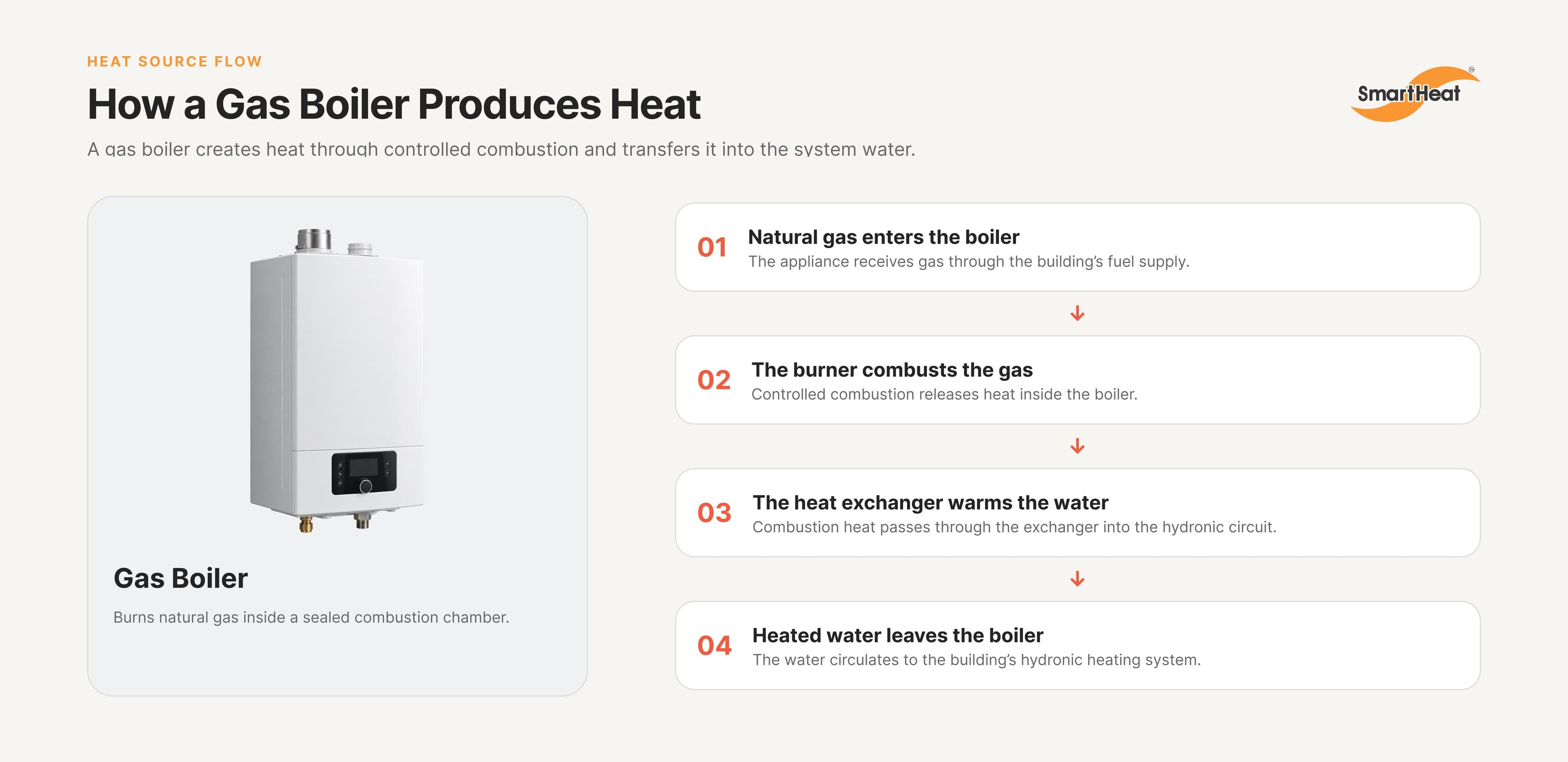
A gas boiler produces heat through combustion.
Natural gas enters the appliance and is burned inside a controlled combustion chamber. The resulting heat passes through a heat exchanger and into the hydronic system water.
Gas boilers can readily produce higher water temperatures. This can be useful in existing systems containing radiators originally selected around hotter water. However, modern condensing boilers can also benefit from lower return-water temperatures when the system is designed accordingly.
The Main Design Difference: Water Temperature
The required water temperature is one of the most important differences between a heat-pump system and a traditional boiler system.
A radiator produces more heat as the temperature difference between the radiator and the room increases. If the supply-water temperature is reduced, the same radiator will provide less output.
This does not mean a lower-temperature system provides less comfort. It means the emitters must provide enough surface area to meet the room heat load at the selected temperature.
A heat-pump system may therefore use:
- Hydronic underfloor heating
- Larger radiators
- Additional radiator panels
- Low-temperature radiators
- Fan-assisted hydronic emitters
An existing boiler system may already contain radiators designed around higher water temperatures. Before replacing the boiler with a heat pump, their output should be checked at the proposed lower temperature.
Some radiators may remain suitable. Others may need to be enlarged or supplemented.
Which Is Better for Underfloor Heating?
A hydronic heat pump is generally a strong match for underfloor heating.
The large heated floor area allows useful room output at relatively low water temperatures, supporting efficient heat-pump operation. The system still needs to account for the building heat load, pipe spacing, floor construction, insulation and finished flooring.
A gas boiler can also operate underfloor heating. Where the boiler circuit supplies hotter water than the floor requires, mixing controls may be needed to deliver a suitable floor-circuit temperature.
The presence of underfloor heating does not determine the heat source by itself, but it often creates favourable conditions for a heat pump.
What About Existing Radiators?
Existing radiators may be compatible with a heat pump, but their output must be checked at the proposed lower water temperature.
Some radiators may remain suitable, while others may need to be enlarged or supplemented. Replacing a gas boiler with a heat pump should therefore be treated as a system-design project—not a simple appliance swap.
Which Heat Source Should You Choose?
A hydronic heat pump may be suited to projects that:
- Are being designed around lower water temperatures
- Use underfloor heating or appropriately sized radiators
- Have suitable electrical capacity
- Aim to reduce dependence on fossil fuels
- May benefit from integration with solar PV
- Require compatible heating and cooling options
A gas boiler may remain relevant where:
- A gas connection is available
- Existing radiators require higher water temperatures
- Electrical capacity is constrained
- Boiler replacement is being considered within an existing gas system
- The project conditions do not currently support an appropriate heat-pump conversion
The final choice should be based on the building, existing services, design temperatures and long-term project objectives.
If a heat pump suits your project, explore how SmartHeat considers the building load, water temperatures and connected heating system before selection.
Projects
Related projects
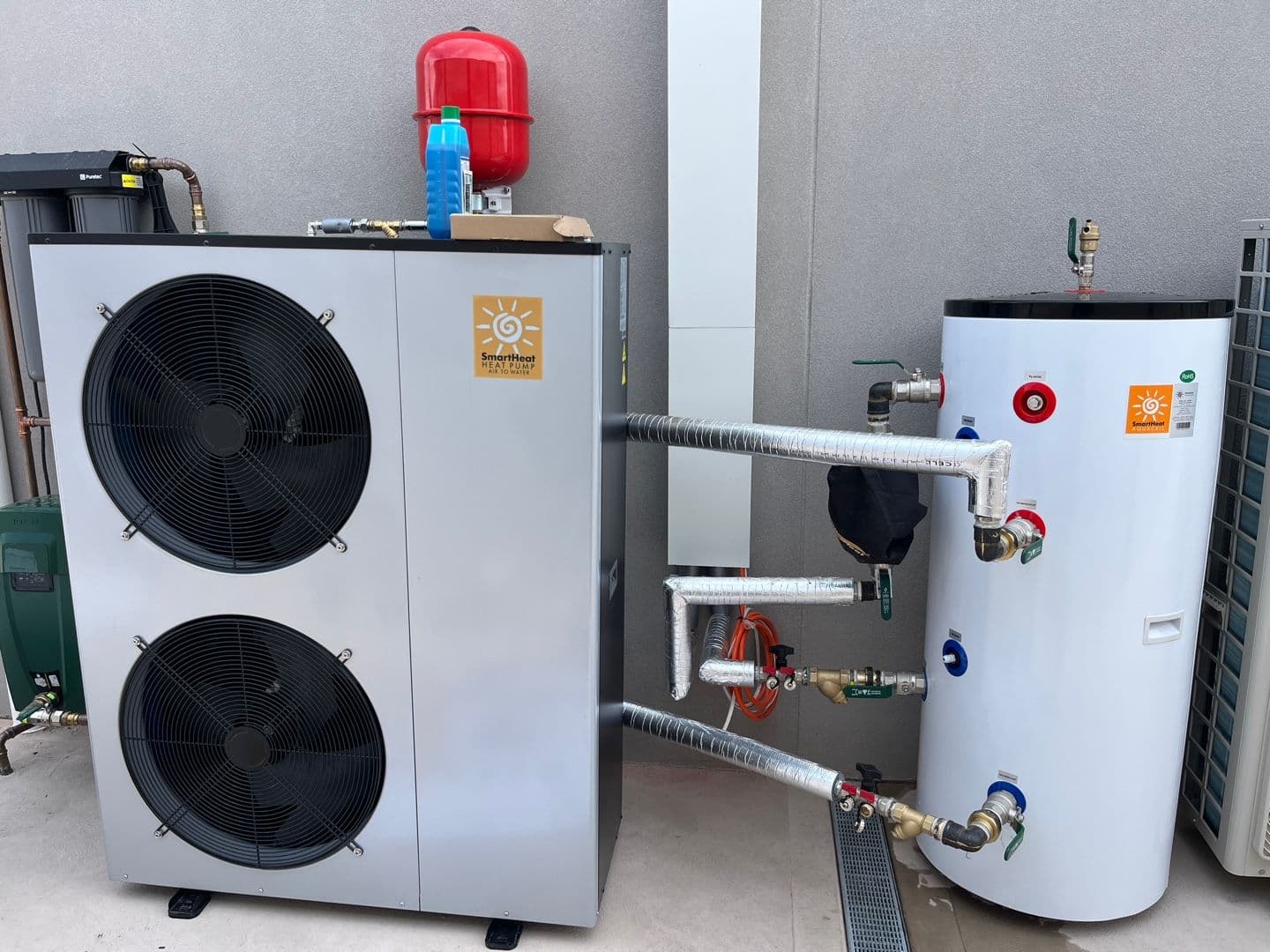
Guildford, Western Sydney, NSW
26kW Inverter Hydronic Heat Pump – Guildford
Heat Pump Installation - Residential Models
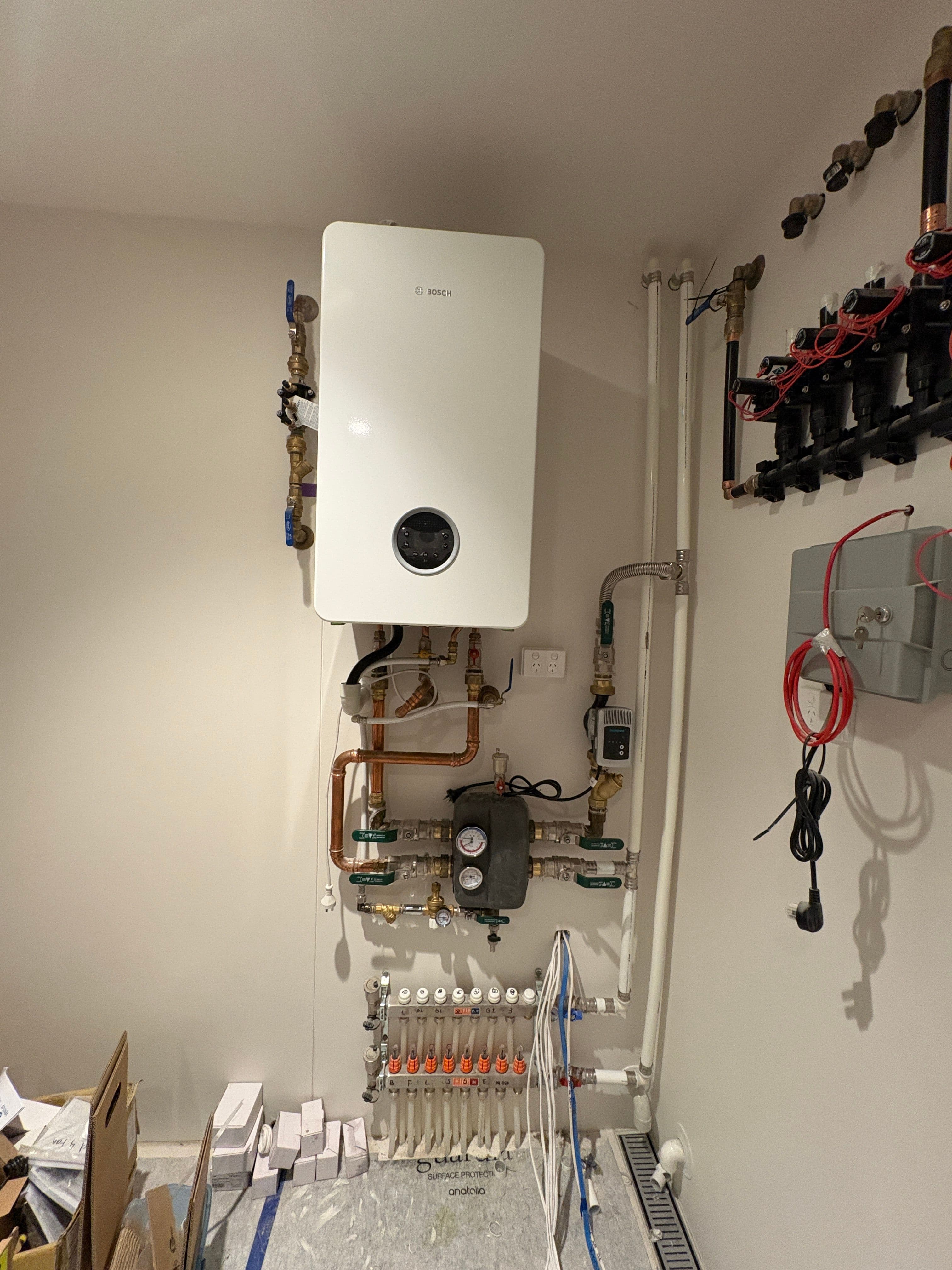
Bar Beach, Newcastle, NSW
Internal Gas Boiler Plantroom – Bar Beach
Gas Boiler Installation - Internal Plantroom
Frequently asked questions
Frequently Asked Questions
Can a heat pump replace a hydronic gas boiler?
Often, yes, but the building heat load, existing radiator output, pipework, electrical supply and required water temperature should be assessed first.
Can a heat pump operate existing radiators?
Yes, if the radiators can provide sufficient output at the heat pump’s design water temperature. Some systems may require larger or additional radiators.
Can a gas boiler operate hydronic underfloor heating?
Yes. Suitable temperature control or mixing equipment may be required when the boiler supply temperature is higher than the floor circuit requires.